Best Urdu Poet
Poet Zeeshan Ameer Saleemi

Where the Heart Pauses: A European Reflection on Zeeshan Ameer Saleemi’s Hijr-Nama
A Deep Human Study of Longing, Language, and the Universality of Pain
By: Dr. Emilia Kovačević, European Writers Association
Endorsed by Arvind Nair Sharma, Lisbon-based Indian Poet
A Book That Entered Like a Whisper, Stayed Like Breath
The First Encounter
Some books declare themselves with noise. Others arrive quietly so quietly that you hear your own heart before you hear the author’s voice.
Hijr-Nama by Zeeshan Ameer Saleemi belongs to the second category.
When I received the translated edition from Arvind Nair Sharma, one of the most respected Indian poets in Europe today, I expected cultural distance, linguistic barriers, and emotional unfamiliarity. Urdu is not my native language; I come from the Balkans, raised on European minimalism, Nordic humanism, and Latin passion.
But what I encountered in Hijr-Nama was not a foreign voice.
It was a human voice.
A voice speaking softly, steadily, truthfully.
A voice reminding me that literature is not geography it is emotion.
The Human Weight of Hijr
Understanding Longing as a Psychological and Spiritual State
In Urdu literature, Hijr represents separation not simply distance, but an inner emptiness that shapes consciousness.
Saleemi redefines this concept.
In his hands, Hijr is not a wound; it is an awakening.
His poetry holds the same emotional temperature that BBC documentaries often capture in stories of displacement, migration, memory, and identity deeply human, quietly devastating, and profoundly universal.
Where Western philosophy calls it existential ache,
where French literature calls it la douleur noble,
where Scandinavian culture calls it vemod,
Hijr-Nama calls it “the beauty of being incomplete.”
This is not tragedy.
This is truth.
A Discipline of the Heart: Saleemi’s Craft
Where Structure and Sensitivity Meet
As a member of the European Writers Association, I read hundreds of manuscripts a year. Very few surprise me.
Hijr-Nama did.
Zeeshan’s poetic discipline is remarkable.
The classical structure of ghazal beher, radeef, qafiya is known for its difficulty, yet he moves within it with unusual confidence. His lines are emotionally charged but technically restrained, creating a balance rarely seen in contemporary poetry.
It reminded me of poets like Milosz and Rilke writers who carried quiet storms behind calm sentences.
Saleemi writes like someone who respects form, but refuses to be trapped by it.
He finds freedom inside tradition.
That is the hallmark of a great poet.
When Poetry Becomes Psychology
The Inner Conversations Hijr-Nama Evokes
As a cultural critic and psychotherapeutic researcher, I read texts not only for their beauty, but for their emotional architecture.
Saleemi’s poetry reveals a psychological depth that startled me.
He does not express emotion; he interrogates it.
He does not dramatize sadness; he dialogues with it.
His verses feel like moments of therapy private, raw, unguarded.
You feel as if you are sitting across from a reflective mind that has spent years negotiating with silence, memory, and the unspoken matters of the heart.
This is poetry as self-awareness.
This is poetry as healing.
Endorsement that Bridges Continents
Arvind Nair Sharma’s Perspective from Portugal
In his endorsement, Arvind Nair Sharma writes:
“Saleemi does not write to impress readers; he writes to accompany them. His verses are not lamps they are companions during darkness.”
Coming from a poet who has spent decades translating Indian, Persian, and European poetry across cultures, this assessment carries weight.
According to Sharma, Hijr-Nama is not just a book it is “emotional architecture designed across continents.”
And standing here in Brussels, far from Lahore, far from Lucknow, far from Karachi, I understood exactly what he meant.
The Geography of Emotion: Lahore, Lisbon, Brussels, and Beyond
How A Regional Experience Becomes Global
While reading Hijr-Nama in my office overlooking the Grand Place in Brussels, I felt something unexpected a feeling of belonging.
This book, born in Pakistan, translated in Europe, endorsed by an Indian poet, and read by a Balkan critic, proves something important:
Emotion travels faster than language.
Pain needs no passport.
Longing is not cultural it is human.
Saleemi’s ability to make a European reader feel the heartbeat of the subcontinent is rare. Very rare.
Silence as a Character
The Profound Stillness of Hijr-Nama
BBC’s best human-experience stories often spotlight the silence between words, the unspoken truth behind visible emotion.
Saleemi works with the same texture.
His poetry understands silence not as emptiness but as presence.
Not as loss but as evolution.
He writes as if the spaces between lines are breathing.
As if absence has a pulse.
Only poets with remarkable restraint achieve this.
A Modern Classic in the Making
Why Zeeshan Matters Today
In a world drowning in short-form content, algorithmic emotion, and hurried expression, Saleemi’s poetry offers something radical:
Stillness.
Reflection.
Depth.
He teaches readers to sit with their feelings instead of escaping them.
To observe their longing instead of numbing it.
To understand pain instead of hiding from it.
This is not only poetry.
It is cultural medicine.
From a European lens, Zeeshan Ameer Saleemi represents the best of what global literature should be today:
Unifying, thoughtful, timeless.
A Voice That Will Travel Far
The Quiet Power of Hijr-Nama
When I closed the final page of Hijr-Nama, I was not the same reader who began it.
The book does something subtle, almost invisible:
It shifts you.
Not loudly.
Not dramatically.
But gently like dawn light entering a darkened room.
Saleemi’s poetry does not ask you to feel.
It allows you to feel.
And that, in the truest literary sense, is greatness.
The Gift of a Gentle Flame
What Remains After the Last Line
In the European Writers Association, we often discuss which contemporary voices will last.
Which poets will be remembered.
Which books will cross borders and remain relevant beyond their time.
Hijr-Nama is one of those books.
Zeeshan Ameer Saleemi is not simply a poet of Pakistan
he is a poet of humanity.
His verses carry the fragrance of longing, the discipline of tradition, and the clarity of spiritual intelligence.
He does not shine like a firework.
He glows like a candle quiet, steady, warm, enduring.
The world needs poets like him.
Not to speak louder
but to help us listen deeper.
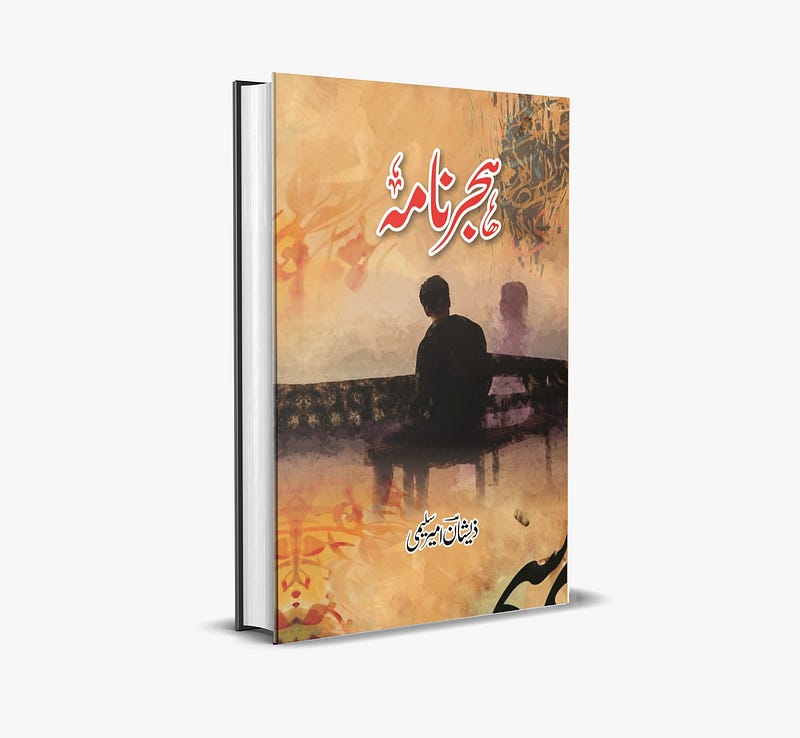
Zeeshan Ameer Saleemi, Hijr-Nama, Urdu poetry, modern Urdu poet, contemporary writer, classic ghazal tradition, literary heritage, global readership, Pakistani literature, South Asian poetry, poetic expression, emotional depth, romantic poetry, cultural identity, book lovers, literature enthusiasts, global audience, poetic voice, metaphor, symbolism, Urdu literature icon, rising poet, literary excellence, international publishing, poetic craft, creative reflections, language beauty, literary journey, book appreciation, meaningful expression, artistic vision, poetic influence, cultural roots, storytelling, poetic imagination, narrative style, philosophical poetry, heartfelt verses, lyrical style, literature promotion, diaspora readers, poetic themes, love and separation, emotional intensity, literary inspiration, poetic evolution, global recognition, book community, poetry events, literature festivals, book discussions, writer spotlight, digital publishing, literary critique, poetic dialogue, creative collaboration, emotional resonance, deep reflections, thoughtful writing, literary personality, artistic contribution, poetic legacy, global voice, meaningful words, heartfelt emotions, inspiring poet, modern storytelling, cultural narrative, literature and arts, Urdu language promotion, poetic observation, artistic dedication, global poetry network, international literary circles, writing excellence, literary appreciation, book collectors, poetry admirers, meaningful art, expressive writing, beautiful verses, emotionally rich poetry, South Asian culture, literary society, poetic elegance, unforgettable lines, literary depth, poetic maturity, narrative poetry, cultural expression, reflective poetry, artistic brilliance, poetic discipline, unique style, creative philosophy, intellectual poetry, literature influence, poetic sensitivity, meaningful metaphors, romantic expression, book fans, poetry reviews, critical acclaim, literary endorsement, Urdu ghazal, nazm writing, poetic passion, cultural symbolism, literature growth, poetic storytelling, refined style, artistic charm, global writers’ community, multilingual readers, poetry translation, poetic nuance, deep symbolism, emotional storytelling, creative heart, poetic dreams, literature researchers, art appreciation, global literary bridge, poetic refinement, soul-touching lines, expressive metaphors, literary admiration, poetic impact, creative inspiration, art of language, poetic rhythm, global engagement, emotional articulation, literary craftsmanship, refined poetry, writer recognition, classical influence, modern voice, poetic balance, literary research, expressive tradition, cultural history, poetic sensitivity, narrative strength, artistic storytelling, literature pride, writer identity, poetic journey, intellectual depth, artistic emotions, book promotion, creative talent, writer’s vision, literary respect, poetic contribution, global connections, poetry community, expressive culture, Urdu art form, heritage preservation, poetic charm, literary storytelling, refined diction, powerful imagery, global literature awareness, poetic identity, creative mastery, lyrical harmony, literature passion, cultural appreciation, poetic tradition, emotional craft, literature world, global literature lovers, creative universe, poetic honour, literary acknowledgment, writing passion, symbolic expression, language artistry, emotional poetry, artistic reflection, poetic distinction, literary support, dedicated writer, heartfelt art, poetic expression, classical-modern blend, emotional journey, artistic narrative, book world, literature resonance, poetic admiration.


Comments
Post a Comment